
Human Factors in Aerospace: Understanding the Basics for Better Safety Management
In the high-flying world of aerospace, where precision and reliability are paramount, understanding human factors is key to enhancing safety and performance. While technology and engineering play a massive role, it’s the human element that often holds the key to operational excellence.
Did you know that about 70 to 80 percent of incidents in aerospace are attributed to human error? It’s a staggering figure that highlights the importance of integrating human factors into safety management systems. But don’t worry, we’re not about blaming individuals—it’s about fostering a just culture where everyone feels safe to speak up and contribute to continuous improvement.
By understanding the difference between human factors and human error, and embracing human factors training, industries can transform potential pitfalls into opportunities for quality management and growth. So, join us as we explore how acknowledging human factors can lead to a safer and more efficient aerospace industry. Curious to learn more?
Dive in and discover how you can implement these insights into your own organisation. For a comprehensive overview of human factors in aviation, check out this FAA resource.
The Importance of Human Factors in Aerospace Safety
Human factors play a crucial role in aerospace safety, forming the backbone of effective quality management systems. By recognising the impact of human performance on safety outcomes, organisations can develop strategies to mitigate risks and enhance operational excellence.
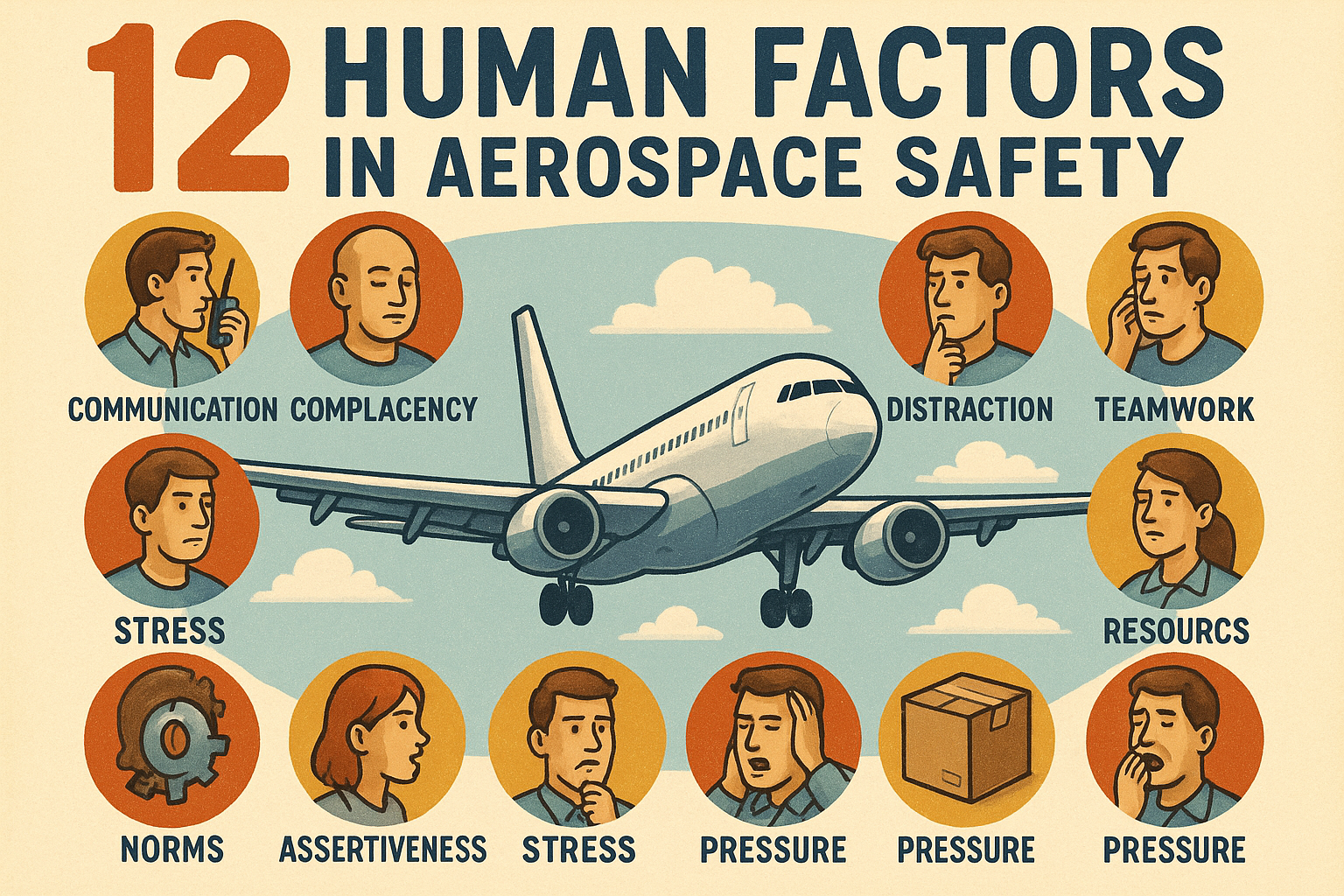
Understanding human factors isn’t just about identifying errors; it’s about creating an environment where people can perform at their best. This approach helps in building a robust safety culture, where everyone from the shop floor to the boardroom is engaged in maintaining high safety standards. By focusing on human factors, aerospace companies can significantly reduce incidents, improve efficiency, and foster a culture of continuous improvement.
The 12 Factors of Human Performance: A Quick Dive into Each
Lack of Communication
Ever played a game of broken telephone? Miscommunication can lead to big mix-ups. Clear and open channels help keep everyone on the same page.
Complacency
Heard of the saying, “Familiarity breeds contempt”? Overconfidence can make us overlook details. Staying alert keeps us sharp and mindful.
Lack of Knowledge
Jumping into the deep end before learning to swim? Continuous learning is key. We don’t know it all, but we can always know more!
Distractions
Ringing phones, pinging emails—sound familiar? Distractions are everywhere. Mastering focus amidst chaos is a superpower.
Lack of Teamwork
Think you can win a relay race solo? Teamwork divides the task and multiplies success. Together, we’re unstoppable!
Fatigue
Burning the midnight oil can have us running on fumes. Rest isn’t a luxury—it’s a necessity to function at our best.
Pressure
Deadlines, targets, and quotas—oh my! Pressure is real, but managing it can make the difference between stress and success.
Lack of Resources
Like trying to win a match without a racket. The right tools and support are crucial for hitting home runs.
Lack of Assertiveness
Ever hesitated to speak up? Being assertive can be tough but voicing concerns can prevent mishaps before they happen.
Stress
We all know that tightrope walk. A bit of stress gives us focus, but too much can topple the balance. Finding your zen is vital.
Lack of Awareness
Like driving in a fog, without awareness, things can get blurry. Staying present and alert helps avoid wrong turns.
Norms
“But that’s how we’ve always done it!” Sound familiar? Challenging old ways can open doors to safer, more effective methods.
How many of these factors have you experienced in your own work-life?
The Origins and Evolution
The concept of human factors in aerospace has its roots in World War II, where the complexity of aircraft operations led to the recognition of human limitations as a critical factor in aviation safety.
Over the decades, the field has evolved significantly:
1940s-1950s: Focus on physical ergonomics and cockpit design
1960s-1970s: Introduction of Crew Resource Management (CRM)
1980s-1990s: Expansion to include maintenance and ground operations
2000s-present: Integration of human factors principles into system design and safety management systems
Today, human factors are considered essential in aerospace engineering, influencing everything from aircraft design to operational procedures.
Distinguishing Between Human Factors and Human Error
It’s crucial to understand the difference between human factors and human error in aerospace safety. Human factors encompass all the elements that influence human performance, including physical, psychological, and social aspects. On the other hand, human error is a specific outcome that results from these factors.
By focusing on human factors rather than just human errors, organisations can take a more proactive approach to safety management. This shift in perspective allows for the development of systems and processes that support human performance, rather than simply punishing mistakes. It’s about creating an environment where errors are less likely to occur in the first place, and when they do, they’re caught early and learned from.
The Role of Just Culture in Aerospace Safety
Implementing a just culture is fundamental to effective human factors management in aerospace. A just culture encourages open communication and reporting of safety concerns without fear of undue punishment. This approach recognises that most errors are not intentional but are often the result of systemic issues or environmental factors.
By fostering a just culture, organisations create an atmosphere where employees feel comfortable reporting potential safety issues. This openness leads to more effective problem-solving and continuous improvement. It’s not about eliminating accountability, but rather about understanding the context in which errors occur and using that knowledge to prevent future incidents.
Addressing Complacency in Auditing and Operations
Complacency is a significant challenge in aerospace safety, particularly in auditing and day-to-day operations. When tasks become routine, there’s a risk of overlooking potential hazards or cutting corners. Recognising and addressing complacency is crucial for maintaining high safety standards.
To combat complacency, organisations can implement strategies such as regular job rotations, ongoing training, and fostering a culture of continuous learning. By keeping tasks varied and engaging, employees are more likely to remain alert and attentive to potential safety issues. Regular audits and safety reviews should also be conducted with fresh perspectives to ensure nothing is overlooked due to familiarity.
The Impact of Human Factors Training on Operational Excellence
Human factors training is a powerful tool for enhancing operational excellence in aerospace. By educating employees about the various factors that can affect their performance, organisations empower their workforce to make better decisions and work more safely.
Effective human factors training covers a wide range of topics, including communication, teamwork, situational awareness, and decision-making under pressure. This training helps employees understand their own limitations and biases, as well as how to work effectively within a team. By improving these soft skills, organisations can see significant improvements in safety outcomes and overall operational efficiency.
Integrating Human Factors into Quality Management Systems
To truly harness the power of human factors in aerospace safety, it’s essential to integrate these principles into existing quality management systems. This integration ensures that human factors considerations are not just an afterthought but are woven into the fabric of daily operations.
Integrating human factors into quality management systems involves several key steps:
Reviewing and updating policies and procedures to include human factors considerations
Incorporating human factors analysis into risk assessments and incident investigations
Developing performance indicators that reflect human factors principles
Ensuring that leadership at all levels understands and supports human factors initiatives
By taking these steps, organisations can create a more holistic approach to safety management that recognises the critical role of human performance in achieving operational excellence.
In conclusion, understanding and applying human factors principles is essential for enhancing aerospace safety and achieving operational excellence. By fostering a just culture, addressing complacency, providing comprehensive training, and integrating human factors into quality management systems, aerospace organisations can significantly reduce risks and improve overall performance. Remember, it’s not about blame—it’s about creating an environment where everyone can work safely and effectively.
The Role of Human Factors in Aerospace Safety
Human factors play a crucial role in aerospace safety, influencing every aspect of operations from design to maintenance. This section explores the fundamental concepts of human factors, their impact on safety, and how they’ve evolved in the aerospace industry.
Understanding Human Factors
Human factors in aerospace refer to the study of how humans interact with systems, equipment, and each other within the aviation environment. This field aims to optimise performance, enhance safety, and reduce errors by considering human capabilities and limitations.
The FAA’s Human Factors Guide outlines key areas such as situational awareness, decision-making, and communication. These factors are critical in ensuring safe operations in complex aerospace environments.
Understanding human factors involves recognising that humans are not infallible and that systems must be designed to accommodate human limitations. This approach leads to more resilient and safer aerospace operations.
The Impact of Human Error
Human error in aerospace can have catastrophic consequences. It’s estimated that 70-80% of aviation accidents are attributed to human error, highlighting the critical importance of addressing this issue.
Errors can occur at any stage, from design and manufacturing to maintenance and operation. Common types of errors include:
Slips and lapses (unintentional errors)
Mistakes (errors in judgment or decision-making)
Violations (intentional deviations from procedures)
Understanding the root causes of these errors is crucial for developing effective prevention strategies. Factors such as fatigue, stress, and inadequate training often contribute to human error in aerospace.
Just Culture and Operational Excellence
Creating a just culture and striving for operational excellence are key strategies in mitigating human factors risks in aerospace. This section explores how these concepts contribute to a safer and more efficient aerospace industry.
Building a Just Culture
A just culture is an organisational environment where employees feel safe to report errors and near-misses without fear of undue punishment. This approach recognises that most errors are not intentional but are often the result of systemic issues.
Key elements of a just culture include:
Open communication channels
Clear distinction between acceptable and unacceptable behaviour
Fair and consistent handling of errors and violations
Focus on learning and improvement rather than blame
Implementing a just culture can lead to increased reporting of safety issues, better problem-solving, and ultimately, a safer aerospace environment. ASQS provides valuable insights into building a just culture in aviation safety.
Continuous Improvement Strategies
Continuous improvement is essential for maintaining and enhancing safety in the aerospace industry. It involves regularly evaluating processes, identifying areas for improvement, and implementing changes.
Effective continuous improvement strategies include:
Regular safety audits and reviews
Encouraging employee feedback and suggestions
Implementing lessons learned from incidents and near-misses
Staying updated with industry best practices and technological advancements
By fostering a culture of continuous improvement, aerospace organisations can adapt to new challenges and maintain high safety standards over time.
Overcoming Complacency in Auditing
Complacency in auditing can significantly undermine safety efforts in aerospace. It occurs when auditors become overly familiar with processes and fail to identify potential issues.
To combat complacency:
Rotate auditors regularly to bring fresh perspectives
Provide ongoing training to keep auditors engaged and up-to-date
Encourage a questioning attitude and attention to detail
Use checklists and structured methodologies to ensure thoroughness
By addressing complacency, organisations can ensure that audits remain effective tools for identifying and mitigating risks in aerospace operations.
Implementing Human Factors Training
Effective human factors training is crucial for enhancing safety and operational excellence in aerospace. This section explores how to implement such training programmes and their impact on quality management and overall safety.
Training for Quality Management
Human factors training for quality management focuses on equipping personnel with the skills and knowledge to identify and mitigate human-related risks in aerospace operations.
Key components of effective training include:
Understanding cognitive biases and their impact on decision-making
Developing effective communication and teamwork skills
Recognising and managing fatigue and stress
Applying human factors principles in daily operations
Training should be tailored to specific roles and responsibilities within the organisation. For example, maintenance personnel might focus on task interruption and attention to detail, while flight crews might emphasise situational awareness and decision-making under pressure.
Enhancing Safety with Human Factors
Integrating human factors principles into safety training can significantly enhance overall safety in aerospace operations. This approach recognises that human performance is a critical component of system safety.
Key areas to address in human factors safety training include:
Situational awareness and risk perception
Error management and recovery techniques
Workload management and task prioritisation
Effective communication in high-stress environments
AUVA’s video resources provide valuable insights into implementing human factors training for enhanced safety.
Practical Steps to Operational Excellence
Achieving operational excellence through human factors training involves a systematic approach that goes beyond classroom learning. It requires practical application and continuous reinforcement of principles in daily operations.
Steps to implement effective human factors training:
Conduct a needs assessment to identify specific areas for improvement
Develop tailored training programmes that address identified needs
Use a mix of classroom instruction, simulations, and on-the-job training
Regularly evaluate and update training content based on feedback and emerging issues
Integrate human factors principles into standard operating procedures and checklists
By following these steps, organisations can create a robust human factors training programme that contributes to operational excellence and enhanced safety. The Aviation Safety Blog offers additional insights into implementing human factors in aviation safety management systems.


