
How to Ace Your Stage One Audit: A Friendly Guide for ISO Certification Success
Embarking on the journey towards ISO certification can seem like a daunting task, but with the right guidance, it doesn’t have to be. Are you gearing up for your Stage One Audit and feeling a bit overwhelmed? Don’t worry, you’re not alone, and you’ve come to the right place. In this friendly guide, we’ll walk you through the essentials of audit preparation, ensuring your organisation is set up for success. From understanding the importance of a robust quality management system to the strategic planning needed for a seamless certification process, we’ve got you covered. Ready to dive in and make your audit experience as smooth as possible? Grab a cuppa, and let’s get started on your path to ISO certification. For a handy reference, don’t forget to download our free checklist to keep you on track.
What is a Stage One Audit?
A Stage One Audit is your first official step towards ISO certification. It’s like a dress rehearsal for the main event, giving you a chance to see how ready you are for the full certification audit. During this audit, we’re not looking to catch you out – we’re here to help you prepare!
The Purpose of Stage One
The main goal of a Stage One Audit is to assess your organisation’s readiness for certification. We’ll take a look at your quality management system, checking if you’ve got the basics in place. This includes things like:
Your quality policy and objectives
The scope of your management system
Key processes and procedures
Roles and responsibilities within your organisation
Think of it as a friendly health check for your business processes. It’s an opportunity to identify any gaps or areas that need a bit more attention before the main certification audit.
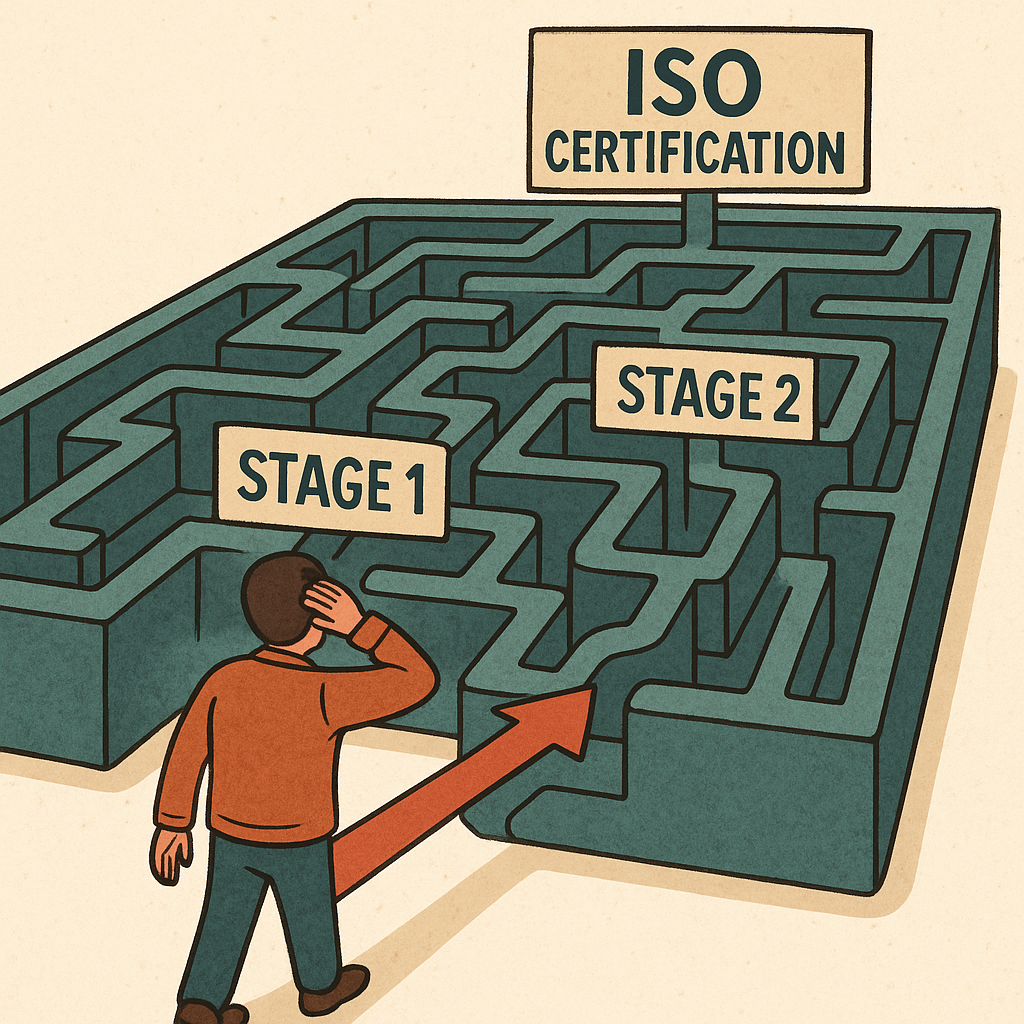
The Stage One Audit plays a vital role in the ISO certification process, serving as a foundation for the more comprehensive Stage Two Audit.
It provides an opportunity for organisations to identify and address any gaps or non-conformities in their management system before the certification audit.
This preliminary assessment helps to ensure that the organisation is on the right track and reduces the risk of major non-conformities during the Stage Two Audit.
Furthermore, it allows the auditor to plan effectively for the Stage Two Audit, ensuring a more focused and efficient certification process.
Preparing for Your Stage One Audit
Now, let’s talk about how you can get ready for your Stage One Audit. Don’t worry, it’s not as scary as it might sound!
Get Your Documents in Order
First things first, you’ll want to make sure all your key documents are up to date and easily accessible. This includes:
Your quality manual (if you have one)
Documented procedures
Process maps or flowcharts
Records of internal audits and management reviews
Having these ready will make the audit process much smoother. It’s like having all your ingredients prepped before cooking a big meal – it just makes everything easier!
Raise Awareness in Your Team
It’s important that everyone in your organisation understands what’s happening and why. Hold a meeting to explain the ISO certification process and what it means for the business. This isn’t just about ticking boxes – it’s about improving how you work as a team.
Conduct Internal Audits
Before the external auditors come in, it’s a good idea to do your own internal audit. This helps you spot any issues early on, giving you time to fix them.
What to Expect on the Day
When the day of your Stage One Audit arrives, try to relax. Remember, this is a collaborative process, not an exam. Here’s what you can expect:
An opening meeting to discuss the audit plan
A review of your documentation
Discussions with key staff members
A tour of your facilities (if relevant)
A closing meeting to summarise findings
The auditor will be looking for evidence that you’re on the right track with your quality management system. They’ll highlight any areas that need improvement before the main certification audit.
After the Stage One Audit
Once the Stage One Audit is complete, you’ll receive a report outlining any findings. Don’t be disheartened if there are areas needing attention. Think of them as opportunities for improvement! The key is to act on any feedback quickly to set yourself up for the Stage Two Audit.
Taking Action on the Findings
So, you’ve got the report in hand—what’s next? Here’s a simple, friendly action plan to get you moving in the right direction:
Review the Findings Together: Gather your team and go through the report. It’s a great chance to get everyone on the same page and maybe even spark some ideas for improvements!
Prioritise the Issues: Not everything needs to be tackled at once. Focus on the high-priority gaps that could impact your readiness for Stage Two.
Develop an Action Plan: Create a clear plan to address each finding. Assign responsibilities, set deadlines, and make sure everyone knows their role.
Implement Changes: This is where the magic happens! Make the necessary changes in your processes or documentation. Keep everyone in the loop so adjustments are smooth.
Re-audit Internally: Once you’ve made the changes, do a quick internal audit. It’s like a mock exam to ensure everything’s shipshape before the real deal.
Celebrate the Small Wins
Remember to celebrate your wins along the way. Each step you take is a move closer to that coveted ISO certification. Did you streamline a process or boost team efficiency? Throw a little office party or give shout-outs to team members who went the extra mile.
By embracing the findings and using them as stepping stones, your organisation will not only ace the Stage Two Audit but also foster a culture of continuous improvement that benefits everyone. Keep your chin up, rely on your team, and remember—you’ve got this! Ready to elevate your business to new heights? Let’s keep pushing forward!
Key Elements to Prepare
To ensure a successful Stage One Audit, organisations should focus on several key elements in their preparation:
Documentation: Ensure all required policies, procedures, and records are in place and up-to-date.
Scope definition: Clearly define the scope of the management system and any exclusions.
Internal audits: Conduct thorough internal audits to identify and address potential issues.
Management review: Hold a management review meeting to evaluate the system’s effectiveness.
Objectives and targets: Establish clear, measurable objectives aligned with the organisation’s strategy.
By focusing on these elements, organisations can significantly improve their readiness for the Stage One Audit and increase their chances of a smooth certification process.
Effective Audit Preparation Tips
Preparing for a Stage One Audit requires careful planning and execution. This section will provide valuable tips on building a strong management system, understanding roles and responsibilities, and avoiding common pitfalls.
Building a Strong Management System
A robust management system is the foundation of successful ISO certification. To build one, organisations should focus on:
Integration: Ensure the management system is integrated into the organisation’s day-to-day operations, rather than existing as a separate entity.
Continuous improvement: Implement processes for ongoing evaluation and enhancement of the system’s effectiveness.
Engagement: Involve employees at all levels in the development and implementation of the management system to foster a culture of quality and compliance.
Real-world example: A manufacturing company successfully built a strong management system by:
Conducting regular cross-functional meetings to review and improve processes
Implementing a suggestion scheme for employees to contribute improvement ideas
Using visual management techniques to make key performance indicators visible to all staff
Roles and Responsibilities in the Audit
Clear definition and understanding of roles and responsibilities are crucial for a smooth audit process. Key roles include:
Role | Responsibilities |
|---|---|
Top Management | Demonstrate leadership and commitment, provide resources |
Management Representative | Coordinate audit activities, liaise with the auditor |
Process Owners | Provide evidence of process effectiveness, answer auditor questions |
Internal Auditors | Conduct internal audits, report findings to management |
It’s essential to ensure that all individuals involved in the audit process understand their roles and are prepared to fulfil their responsibilities effectively.
Common Pitfalls and How to Avoid Them
When preparing for a Stage One Audit, organisations often encounter several common pitfalls. Here are some to watch out for and how to avoid them:
Insufficient documentation: Ensure all required documents are in place and up-to-date.
Lack of employee awareness: Conduct training sessions to educate staff about the ISO standard and their role in the management system.
Inadequate internal audits: Invest in thorough internal audit training and allocate sufficient time for audits.
Failure to address non-conformities: Implement a robust corrective action process to address and close out any identified issues promptly.
Overlooking legal requirements: Maintain an up-to-date register of applicable legal and regulatory requirements.
By being aware of these pitfalls and taking proactive steps to avoid them, organisations can significantly improve their chances of a successful Stage One Audit.
Navigating the Certification Process
The certification process involves multiple stages, from initial preparation to ongoing maintenance. This section will guide you through transitioning from Stage One to Stage Two, ensuring continuous improvement, and reaping the benefits of successful ISO certification.
Transitioning from Stage One to Stage Two
The transition from Stage One to Stage Two is a critical phase in the ISO certification journey. To ensure a smooth transition:
Address any non-conformities or areas for improvement identified during the Stage One Audit.
Review and update the management system based on Stage One feedback.
Conduct additional internal audits focusing on areas highlighted in the Stage One report.
Hold a management review to assess readiness for the Stage Two Audit.
Communicate Stage One results and Stage Two expectations to all relevant staff.
By following these steps, organisations can bridge the gap between the two audit stages and increase their chances of certification success.
Ensuring Continuous Improvement
Continuous improvement is a fundamental principle of ISO standards. To maintain and enhance the effectiveness of your management system:
Regularly review and update processes based on performance data and feedback.
Encourage a culture of innovation and problem-solving among employees.
Use management reviews as an opportunity to set new objectives and allocate resources for improvement initiatives.
Implement a robust corrective and preventive action process to address issues systematically.
Case study: A service company implemented a continuous improvement programme that resulted in:
15% reduction in customer complaints
20% increase in employee satisfaction scores
10% improvement in operational efficiency
Benefits of a Successful ISO Certification
Achieving ISO certification can bring numerous benefits to an organisation. Some key advantages include:
Enhanced credibility and reputation in the market
Improved operational efficiency and consistency
Increased customer satisfaction and loyalty
Better risk management and compliance
Access to new markets and business opportunities
“ISO certification has been a game-changer for our business. It has not only improved our internal processes but also opened doors to new clients who value our commitment to quality.” – CEO of a certified SME
To maximise these benefits, organisations should view ISO certification as an ongoing journey of improvement rather than a one-time achievement. By continuously refining and enhancing their management system, companies can unlock the full potential of ISO certification and drive long-term success.


